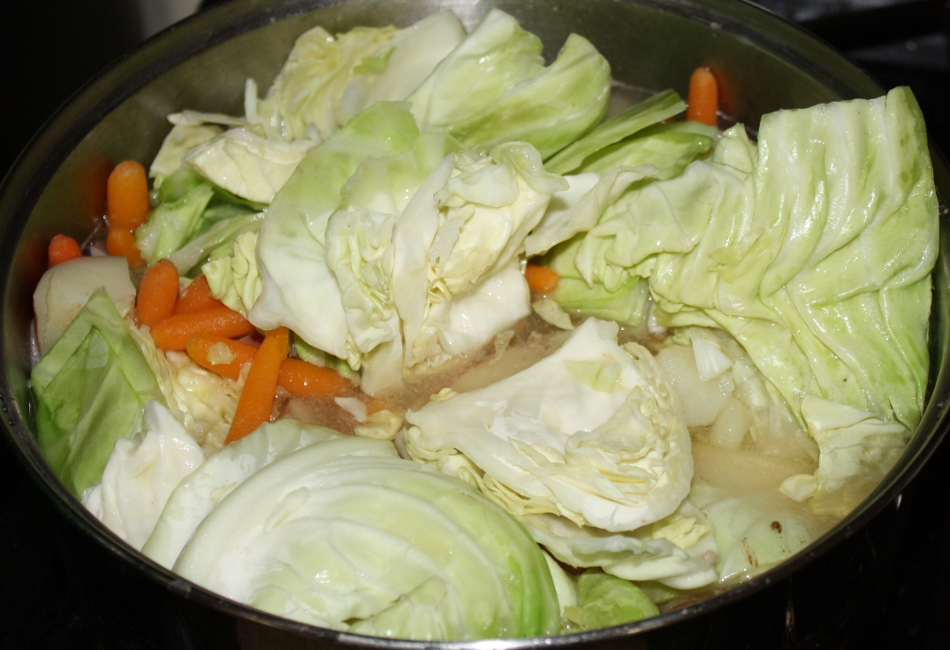
There are a few running themes here. "Unconventional" might be one label, "earthy" another. But I see "Middle Eastern cuisine," and in particular, the use of herbs for flavor. Granted, crickets aren't herbs. Those just help bring my mind back to biblical times.
The Good News
Crickets are edible and have been eaten for millennia. Jes and I have a friend who I've been egging on to bring some for us to try, and he finally did. Also in his box of goodies: cricket flour, which he uses to make "Johnthebaptist bars." It rolls off the tongue—literally. I'm joking; I'm sure they taste great. They're protein bars based on the Scriptures which tell us what John the Baptist ate (Mark 1.6). Whether or not the interpretation should be removed from context is its own story, however. Similar to how "Ezekiel bread" is also popular today; if that recipe were followed to the T (Eze. 4.9-15), I don't think anyone would eat it.
Eating or consumption in Scripture connotes a sense of "incorporation." Bringing this back to something more palatable [than crickets], bitter herbs are often allegorical of bitter circumstances. Though not Scriptural, Yul Brynner said in The Ten Commandments (1956), "The herbs remind us of the bitterness of our captivity."
The Passover Seder includes roasted lamb with "bitter herbs" and "bread made without yeast" (Ex. 12.8, Num. 9.11). The first Passover was named for the Jews in Egypt being spared from a death sentence. The herbs were symbolic of the grievous night (Ex. 12.30), the unleavened bread symbolic of haste (Deut. 16.3). The lamb's blood symbolized their being saved from death (Ex. 12.21-23), while eating the lamb itself was the act of offering and sacrificing it (Lev. 23.37-38), and therefore partaking in its symbolism (ref. I Cor. 11.26).
In Lamentations 3, verses 15 and 19, Jeremiah says: "He has filled me with bitter herbs/ and sated me with gall.... I remember my affliction and my wandering,/ the bitterness and the gall." Matthew 27.34 speaks of gall being mixed with wine, presumably as a form of sedation, and particularly for ingestion by those who are dying. The same event recorded in Mark 15.23 uses the word "myrrh," implying that the actual additive used was simply known for its bitterness. Psalm 69.21 is another Messianic passage that aligns bitter flavor with bitter feelings.
Now, the correlations throughout Scripture can only get more beautiful. The Messiah was prophesied to be like that lamb offered in sacrifice (Isa. 53.7,10). Not only would he suffer a bitter death (Isa. 53.9), he was gifted and given bitter herbs (Matt. 2.11, John 19.39-40). In John 6, verses 28 through 58, he allied himself to bread and told everyone to partake in his sacrifice (John 6.51). He commanded against yeast (Matt. 16.11-12), and we have been encouraged to make spiritual bread without yeast (I Cor. 5.7-8). He compared himself to manna, which came directly from God (John 6.31-33). Just as blood signified cleansing (Heb. 9.18-22) and life (Lev. 17.11-12), his blood was the source of life (John 6.53-57, 4.13-14). The people around him mistook allegory for madness (John 6.52), but like every prophet before him, he only spoke in allegory (Matt. 13.34-35). The simplest thing he told them was to believe (John 6.28-29,47).
A Different Kind of Oil
"I am not ashamed of the gospel, because it is the power of God for the salvation of everyone who believes: first for the Jew, then for the Gentile." (Rom. 1.16)
Returning to the herbs what started this, it's interesting that most herbs are in fact bitter, astringent, or—to be perfectly neutral—strong. I recall taking a course on Medicinal Plants at college, though I can find no evidence for it in the form of homework. I'm sure I have a notebook somewhere. Anyway, what we commonly refer to as "herbs" in the kitchen are the leaves of plants which exhibit
This oil is most often exuded from the surface of the plant's leaves—which, by the way, can be a natural pest-deterrent in your garden. Using deer as a prime example, plants with a strong taste or stinging fragrance are avoided by their sensitive noses, so interspersing one's vegetable plot with plants such as rosemary, lavender, oregano and basil can be extremely advantageous in that regard.
Like tea which has steeped for too long, densely concentrated herbal oils can be distasteful. Tannins play some role in this bitterness, being abundantly present in areas of new growth, but among herbs themselves, some flavors are stronger than others, and especially when dried they can become overly excessive.
In the debate of fresh vs. dried herbs, I can tell you—only from a consumer's standpoint, mind you—that dried is the way to go. I have wasted so much money through the purchase of fresh herbs that I look forward to simply growing my own one day. For the DIY herb gardeners (and I don't mean the tokers), this source would prove very useful by not only covering the basics of how to dry your garden stock, but also providing you with several methods for infusing their flavors, such as in vinegar, oil, and even sugar.
GG
My delight in the kitchen is to create flavor combinations using unconventional pairings. As yet, I cannot think of a better way to describe it, but these sorts of meals end up in my honorable mentions, my portfolio. In this particular, mental series, the following marks the third to come about. And it all starts with a choice of meat.
 |
| March 9, 2013 - Turkey-touille! |
As the name suggests, this came about as a derivation from ratatouille, showcasing green and yellow squash, and eggplant. But, it's the ground turkey which is responsible for harmonizing all of the other ingredients. I won't go so far to say this was cooked to perfection; far from it, as I don't cook with ground meat often enough to keep it moist. However, it's not the inconsistency of overcooked squash and eggplant beside dry squiggles of turkey which I'm highlighting here—it's not the textures, but the flavors. And the selection of those flavors has some, let me say, "territorial" background.
What I mean by that is this: Turkey is a game bird. It's traditionally hunted. So, when I think of a live turkey, for better or for worse certain foods come to mind. Gourds, for one. The squash taken care of, there is a certain essence of pumpkin in this pan: its seeds. This isn't exactly the same concept as toasting whole seeds, especially if you're like me and you eat the shell, but the nutty flavor of shelled pumpkin seeds is what ties this dish to some of my other most beloved creations (recipes to follow).
Black olives, though among my least favorite processed foods (for reasons I'll delve into another day), mark the final ingredient that doesn't fall under the category of spices. I like their tart addition to certain meals, and without them I think turkey-touille would have ended up too sweet, especially for Jes's tastes.
I don't know what it is with eggplants and cinnamon, but I just love putting them together. Not only is it earthy—and that is a word I would apply to the majority of the flavors here—but it also adds balance to the other piquant spices: powdered ginger, garlic powder and ground pepper. And then, of course, salt. Spices not being herbs, this recipe doesn't actually have herbs in it. If you're wondering, then, why it's here, it's to serve as a segue into the really delectable crème de la crème dinner below.
Scarborough Fair
If you're looking to make herbs shine, simply pair them with poultry. There's nothing a dense piece of white meat needs more than flavor. Now, I much prefer dark meat if given the choice, but this recipe is all about melding flavors over a slow heat, and white meat can certainly take it.
 |
| March 26, 2015 - Unnamed Turkey |
It begins with a frozen turkey breast, and thanks to Jes, it is joined with a splash of water. I don't remember the brand, and it's not my interest to sell it. But, I was pleasantly surprised by how much liquid came out of this by the time it was done.
 |
| March 26, 2015 - Unnamed Turkey |
As a precursor to potting the turkey, we charbroiled some choice veggies for that extra layer of yummy goodness: the default carrots, celery, and onions, along with a personally appealing root, turnip. My only complaint was that I insisted on including sliced garlic on that baking sheet. I'm sure the flavor was to be a vital enhancement, but it burned into unrecognizable oblivion. Never have I ever seen such a pure piece of cancer. I tasted it, too, before chucking it. It had a very similar texture to...liver.
 |
| March 26, 2015 - Unnamed Turkey |
Enter our good friend Herb. The turkey and vegetables slow-cooked overnight, and the next morning before work we added the famous four: parsley, sage, rosemary, and thyme. More than just a good song, these lend their oils well to chicken, so why not turkey? I did choose fresh for these, but I've since changed my position about using fresh herbs. After all, the point in using them is the "medicinal" oil they contain. Dried herbs simply lack water, and oil extracts are even better; the further you go from the fresh leaf, the [generally] higher quality of the flavor you're looking to add, though you'd understandably need a lower quantity added to your meals.
Alongside these, the final ingredient came in the form of ground black pepper. I don't know why I didn't use peppercorns. Maybe I intended to consume it with the meal. Regardless, something I am always proud of for reasons
 |
| March 26, 2015 - Unnamed Turkey |
Ten hours later, this is what we got. Jes, of course, had to deal with these scents wafting from the kitchen all day long. This took a grand total of 22+ hours. It was probably a wholly arbitrary amount, since, whenever we use our slowcooker, it is in between our sleep and work schedule. But I hardly think we could have too much time for this. Thyme, on the other hand, requires better management.
Other sources:
http://nutritiondata.self.com/facts/lamb-veal-and-game-products/4669/2
http://www.biblicalhorizons.com/biblical-horizons/no-24-locusts-and-honey/
http://movie-sounds.org/famous-movie-samples/sound-clips-from-the-ten-commandments-1956/the-herbs-remind-us-of-the-bitterness-of-our-captivity-eleazar
http://www.dictionary.com/browse/gall